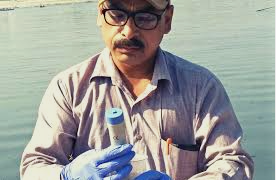
Every week since 1982, volunteers and scientists at the Sankat Mochan Foundation’s Tulsighat Laboratory have collected water samples from the Ganga at Varanasi. What began as a modest monitoring effort has grown into one of India’s longest-running citizen-science records for a sacred river — a bridge between devotion for Maa Ganga and the discipline of modern environmental science.
The latest assessment, compiled in early 2026, draws on samples taken at five key bathing ghats between Assi Ghat and Rajendra Prasad Ghat. Parameters measured include Biochemical Oxygen Demand (BOD), fecal coliform bacteria, total dissolved solids, and pH levels. Findings continue to underline a familiar truth: untreated domestic sewage remains the dominant source of pollution along this stretch of the river.
Key findings from Tulsighat Lab
- BOD levels at the Varuna–Ganga confluence remain well above acceptable bathing-water standards, especially during low-flow winter months.
- Fecal coliform counts spike sharply downstream of major nalas, confirming that interceptor coverage is still incomplete in several wards.
- Post-monsoon recovery is visible each year when higher river discharge dilutes pollutants — but the improvement is temporary without full sewage diversion.
SMF has long argued that faith and science must walk together. Devotees who come to the ghats for morning prayer deserve water that is safe for ritual bathing. The laboratory’s work gives communities, policymakers, and courts an independent scientific record — one that cannot be dismissed as mere sentiment.
From monitoring to action
The foundation’s two-step plan — watertight interceptors along Ganga, Varuna, and Assi, followed by the Advanced Integrated Wastewater Pond System (AIWPS) — was unanimously accepted by Varanasi Nagar Nigam in 1997. Decades later, the data from Tulsighat Lab remains a reminder that plans on paper must become infrastructure on the ground.
Mahant Prof. Vishwambhar Nath Mishra has often said that cleaning Ganga is not only an engineering challenge; it is a moral responsibility shared by the city, the state, and the nation. The laboratory exists to keep that responsibility visible — week after week, sample after sample.
“We do not monitor the river to create alarm. We monitor it so that no one can say they did not know.”
— Sankat Mochan Foundation, Tulsighat Laboratory
SMF invites students, researchers, and concerned citizens to visit the laboratory, learn about water-testing protocols, and join the Swatcha Ganga Campaign. Whether through volunteering, advocacy, or support for sewage-treatment projects, every contribution moves Varanasi closer to the goal every devotee holds in prayer: Not a drop of sewage in Ganga.