Appropriate Technology
Gravity-fed AIWPS sewage treatment — low energy, pathogen removal, and nutrient recovery suited to Varanasi's conditions.
Among India's longest-running civil society efforts to clean a river — a struggle for appropriate technology, democratic process, and people's participation.
The Swatcha Ganga Campaign of Sankat Mochan Foundation documents India's longest sustained NGO-led effort to protect a holy river — combining scientific monitoring, international collaboration, legal advocacy, and grassroots participation.
This struggle has pursued three interconnected goals: appropriate technology for sewage pollution at religious bathing areas, democratic decision-making, and genuine people's participation in river governance.
Over decades, the campaign evolved through environmental education, village water supply programs, ghat cleaning, international student congresses, and relentless water quality monitoring at Tulsighat.
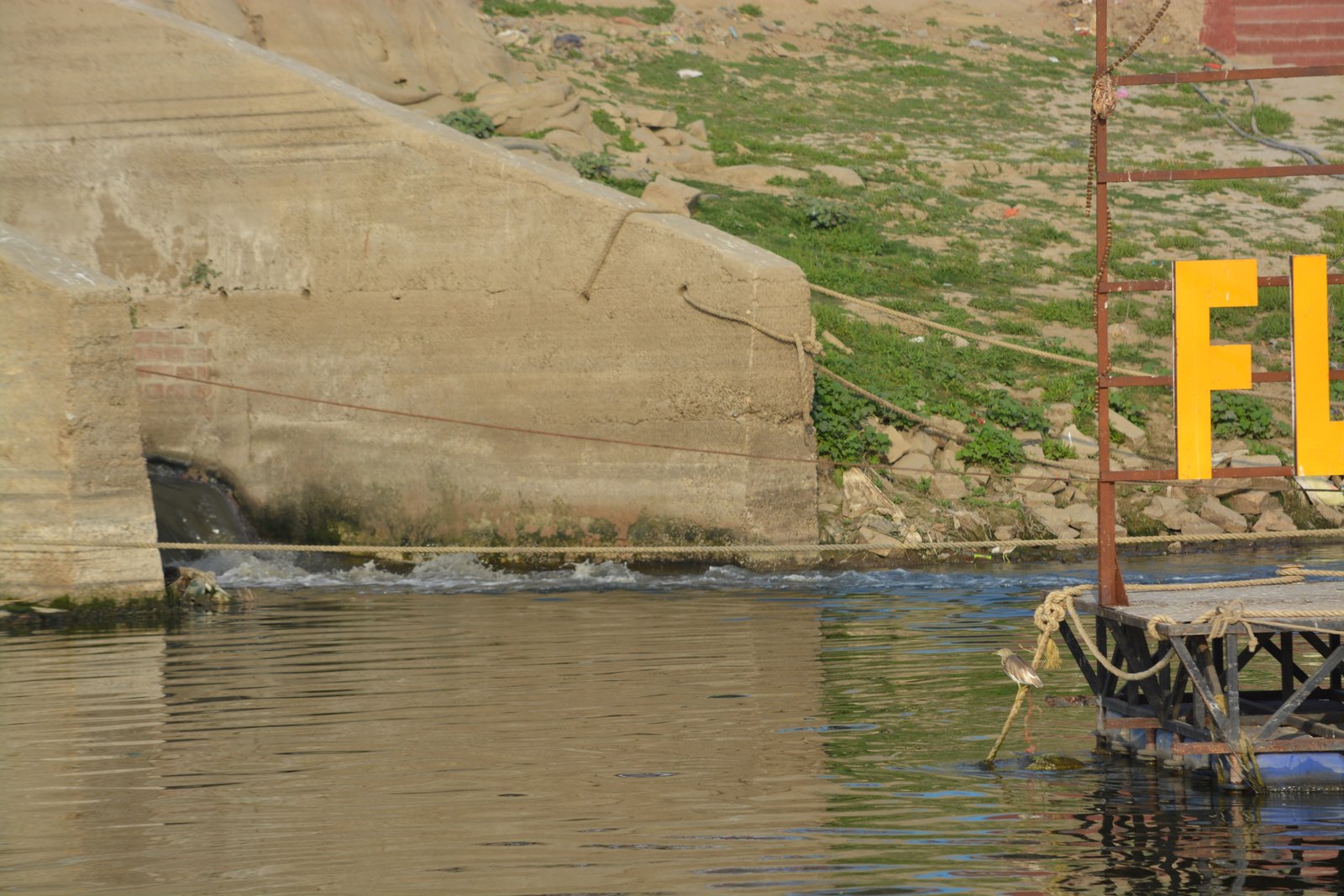
Gravity-fed AIWPS sewage treatment — low energy, pathogen removal, and nutrient recovery suited to Varanasi's conditions.
Advocating municipal accountability under the 74th Amendment — elected corporators, public hearings, and transparent technical review.
Human chains, student congresses, village water schemes, ghat adoption, and community monitoring along the riverfront.
All activities run concurrently, but one role takes primary importance at each stage of the struggle.
Public awareness, children's painting competitions, women's conferences, and presenting memoranda to national leaders.
SGRL monitoring exposes GAP I failures; SMF alerts the public when sewage continues at bathing ghats despite official claims.
International seminar, faecal coliform monitoring, and the AIWPS Project Feasibility Report endorsed by VNN.
Local control, accountability, transparency — legal advocacy, village water supply, and grassroots mobilisation.
These roles have been fluid, complemented by environmental education, village water supply programs, solid waste removal from Ganga along the ghats, international student congresses, and World Water Day human chains.
A decade-by-decade record of milestones, legal battles, scientific breakthroughs, and public action.
Developed with hydraulic scientists at UC Berkeley, the Advanced Integrated Wastewater Pond System represents the SMF/VNN alternative to failed activated-sludge technology.
The feasibility study proposed gravity interception of sewage along bathing ghats and AIWPS treatment — unanimously adopted by Varanasi Nagar Nigam on 2 May 1997 and forwarded to NRCD.
Site inspection (Nov 1997) and Prof GD Agrawal's committee both confirmed technical feasibility of the VNN/SMF proposal.
Since 1993, the Swatcha Ganga Research Laboratory has provided independent evidence when official claims contradicted ground reality at Varanasi's bathing ghats.
The 74th Constitutional Amendment (October 1992) mandated that state legislatures delegate sanitation, sewerage, environment, and water supply management to Municipal Corporations — creating a third tier of government.
First Nagar Nigam elections in Varanasi were held in November 1995. The VNN House — 90 elected corporators plus ex-officio members — holds primary decision-making authority, followed by Regional Committees, Executive Committee, Mayor, and City Commissioner.
SMF's struggle has consistently demanded that local elected representatives — not distant bureaucracies — determine the technology and accountability framework for cleaning Ganga at Varanasi.
Your support funds water quality monitoring, environmental education, ghat cleaning, and community programs that keep civil society's voice alive for the river.
Domestic Bank Transfer (INR)