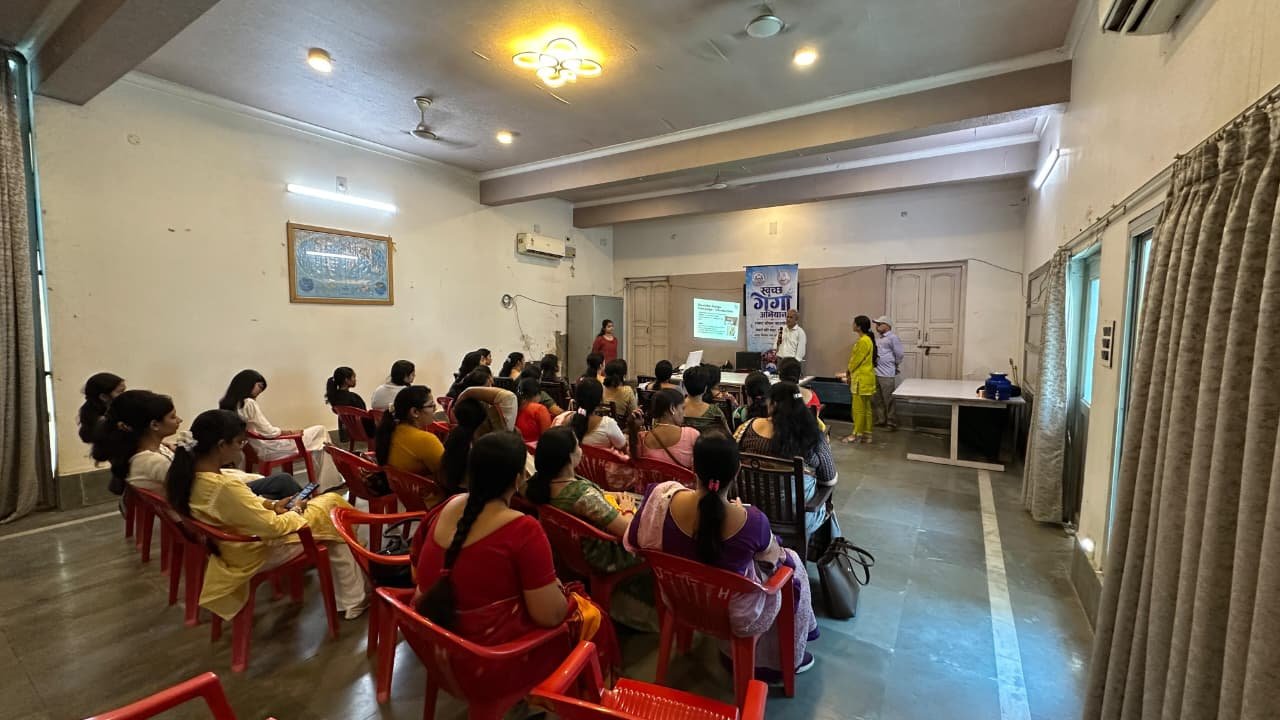
The Clean Ganga Awareness Workshop was organized by Sankat Mochan Foundation at Tulsi Ghat, Varanasi, on 23 June 2026. The workshop aimed to raise awareness regarding the conservation and cleanliness of the River Ganga and to encourage active community participation in environmental protection initiatives.
The event brought together participants from diverse backgrounds, including students, researchers, environmental enthusiasts, and local community members, to discuss sustainable practices and collective actions for preserving the Ganga ecosystem.
Objectives of the Workshop
- To create awareness about the ecological, cultural, and social significance of the River Ganga.
- To educate participants about environmental challenges affecting river health.
- To assess participants environmental impact through a carbon footprint questionnaire.
- To encourage sustainable lifestyle choices and responsible environmental behaviour.
- To facilitate community engagement and collaborative visioning for a cleaner Ganga.
Workshop Proceedings
The workshop began with participant registration and a welcome address from representatives of Sankat Mochan Foundation. The objectives and schedule were shared with participants before the awareness sessions began.
An informative presentation highlighted the ecological importance of the River Ganga, its cultural and spiritual significance, major sources of pollution, challenges from urbanization and waste disposal, and opportunities for public participation in conservation efforts.
Participants completed a carbon footprint assessment questionnaire to understand personal environmental impact, reflect on consumption patterns, and explore responsible lifestyle practices.
A participatory visioning activity encouraged participants to imagine a cleaner and healthier future for the River Ganga through community-led conservation, waste reduction, awareness campaigns, youth engagement, and local action.
The sharing session and open discussion emphasized community participation, behavioural change, stronger awareness programs, and long-term commitment to conservation activities.
Key Outcomes
- Increased awareness regarding Ganga conservation and environmental sustainability.
- Enhanced understanding of personal carbon footprints and their environmental implications.
- Active participation and engagement of attendees in discussions and activities.
- Generation of community-driven ideas for river conservation.
- Strengthened commitment among participants to support environmental protection efforts.
Conclusion
The workshop provided a platform for education, reflection, and community engagement on issues related to river conservation and environmental sustainability. Through presentations, interactive activities, and collaborative discussions, participants gained valuable insights into their role in protecting the River Ganga.
The workshop reaffirmed the importance of collective responsibility and community action in ensuring the long-term health and sustainability of the Ganga ecosystem.